All work · Design sprint
Story Stitcher App
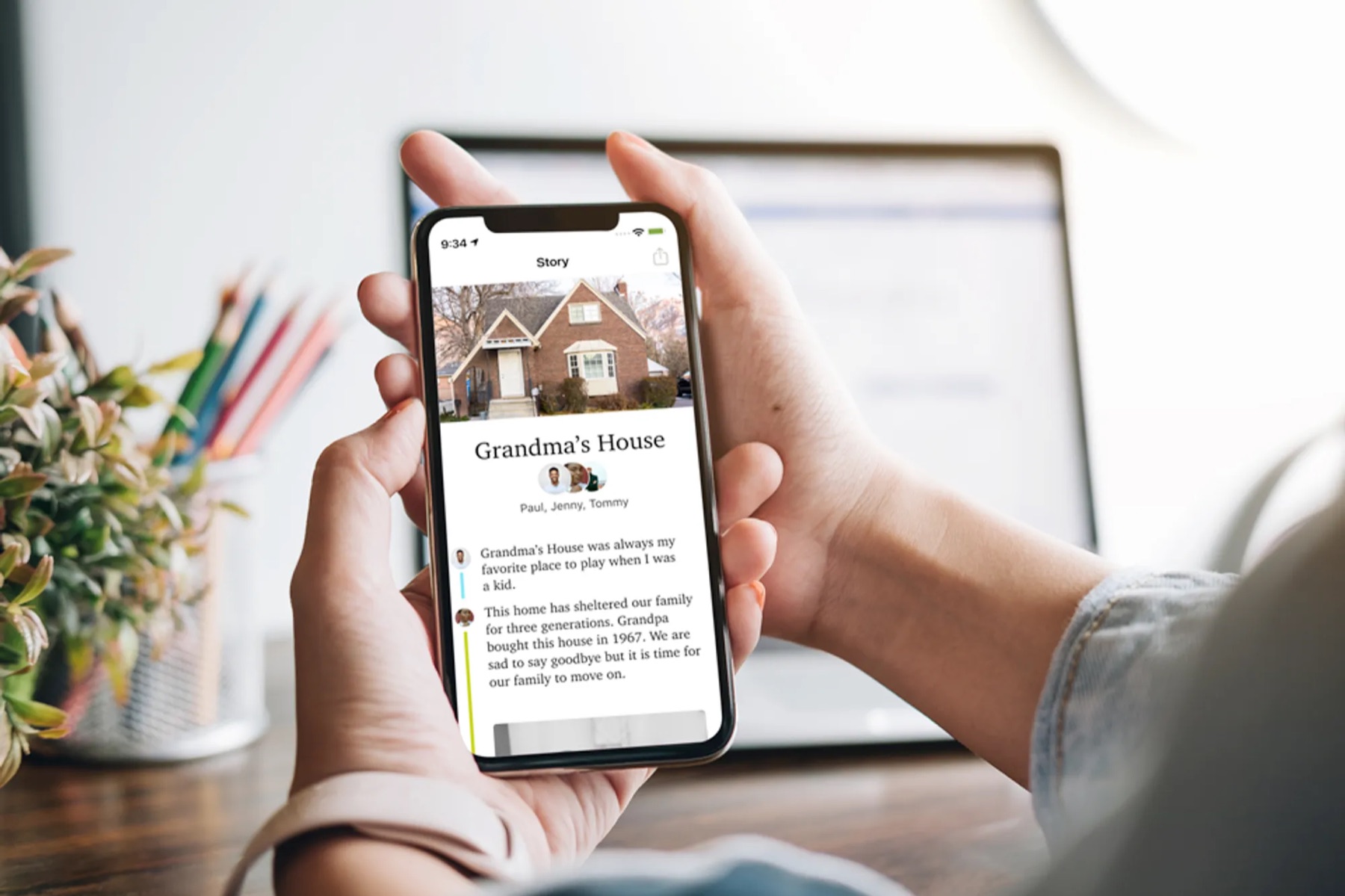
In a Google Design Sprint for FamilySearch, my solution sketch was chosen for prototyping: a mobile app where families write shared stories together.
- ClientFamilySearch
- RoleSenior UX Designer
- Duration1 week
- TeamProduct Manager, Designer, Developer, Marketing Manager, various stakeholders
Frame the problem
FamilySearch wanted a product that would introduce family history to people who weren’t familiar with it. Many newcomers found the platform hard to navigate and couldn’t find key features, so the sprint set out to create a more intuitive, approachable experience for people of every level of technical comfort.
A one-week design sprint
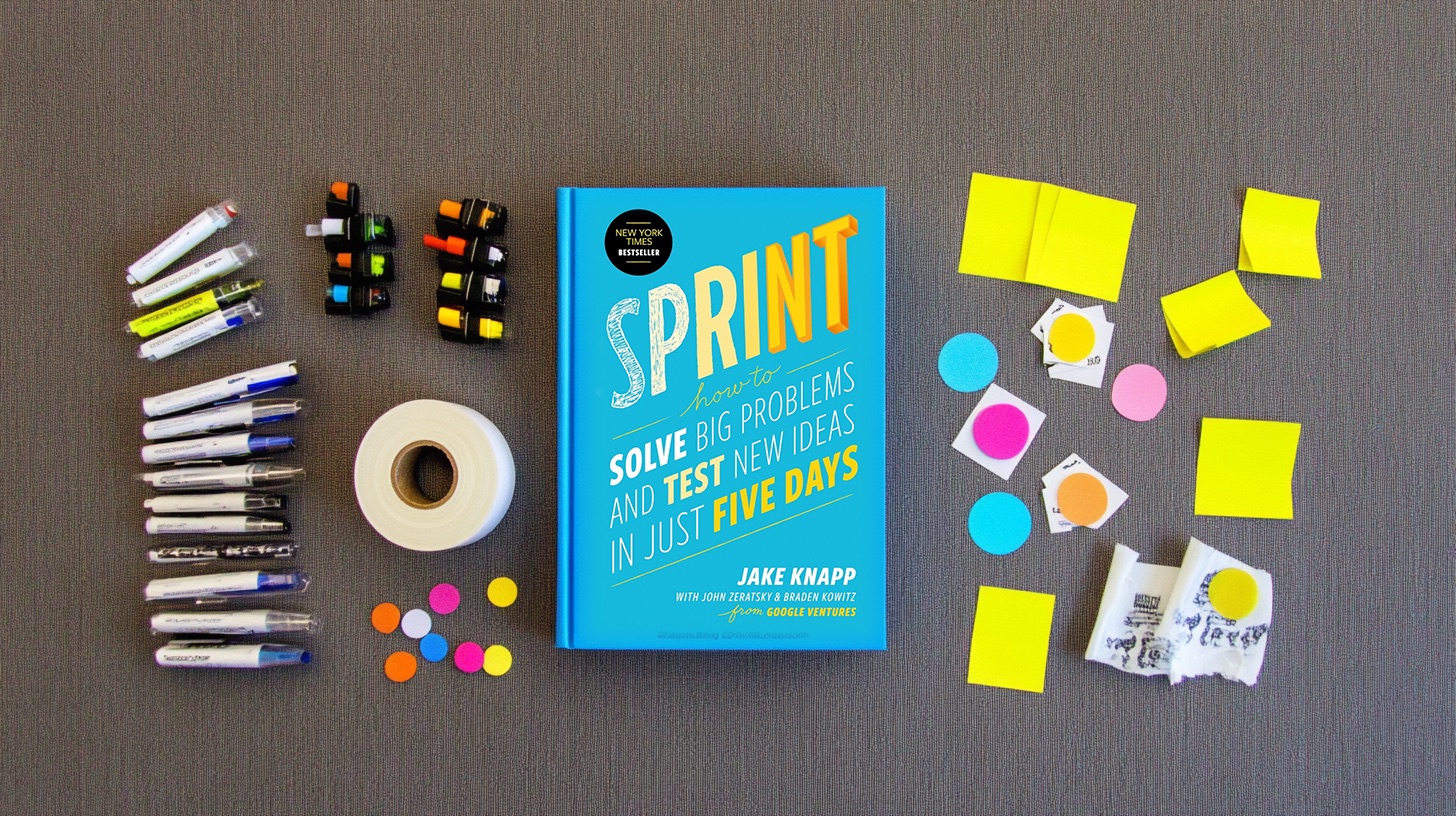
We ran the week using the Google Design Sprint format.
Refining the product goal
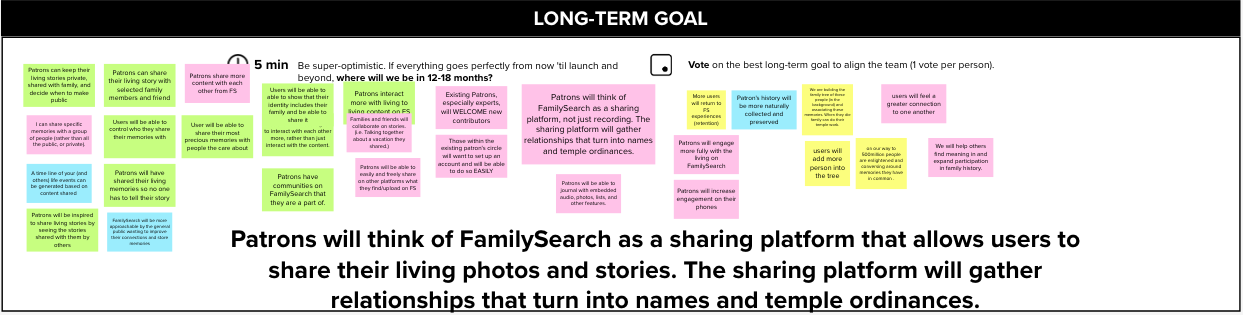
We started with an exercise to sharpen the product goal as a group.
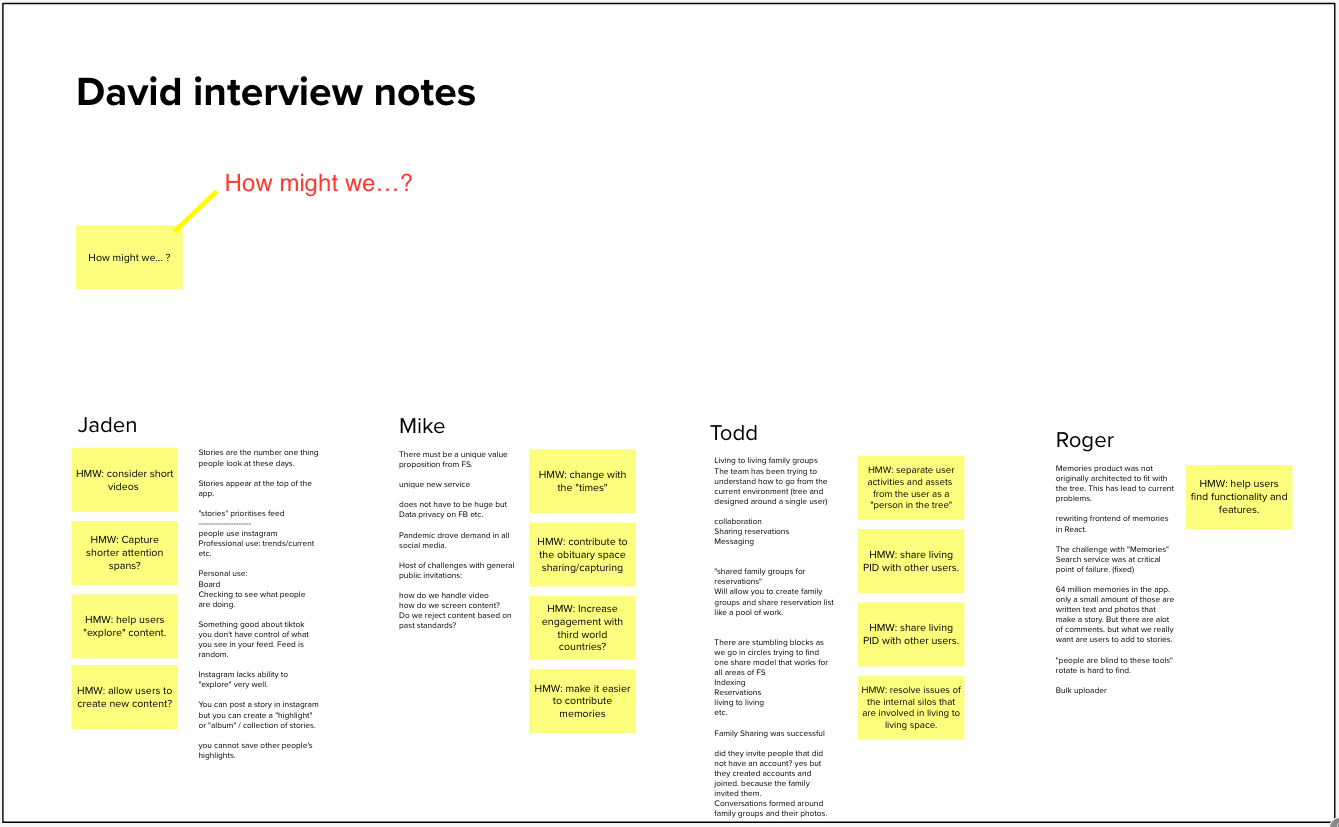
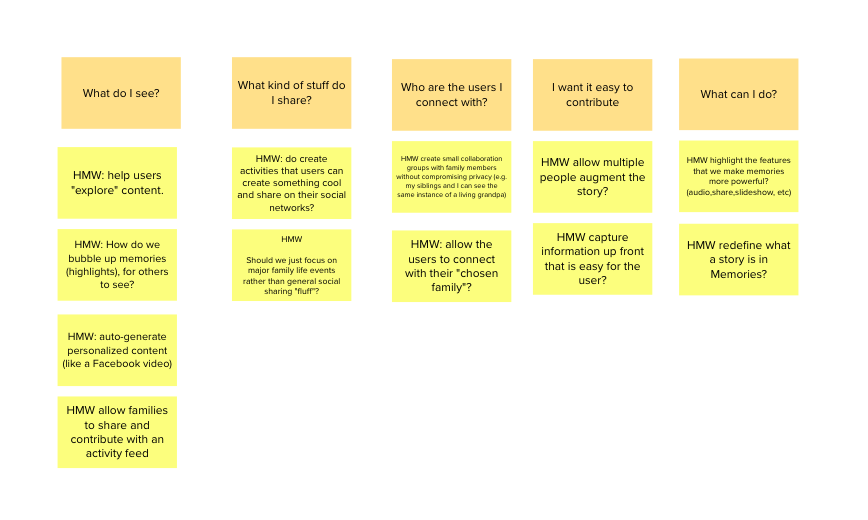
Interviews to “How might we”
We interviewed subject-matter experts and users, then turned what we heard into “How might we” statements to frame the opportunity.
Map and explore
With the problem framed, I mapped the journey so the group shared one picture of it. Then we looked outside the organization for ideas before sketching our own.
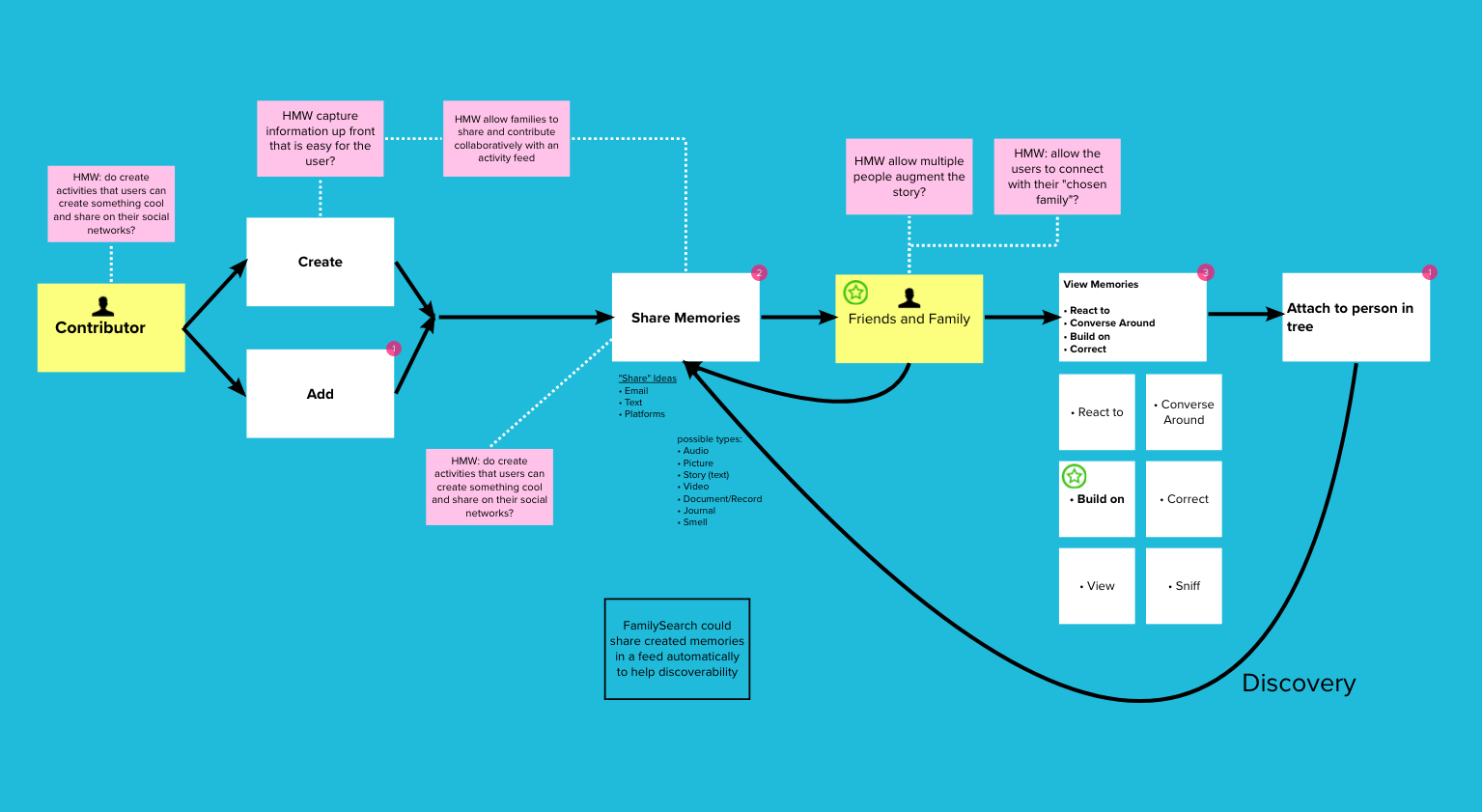
Map and target
I mapped a theoretical user journey to consolidate conclusions from the interviews and How Might We exercises, so the group stayed on the same page.
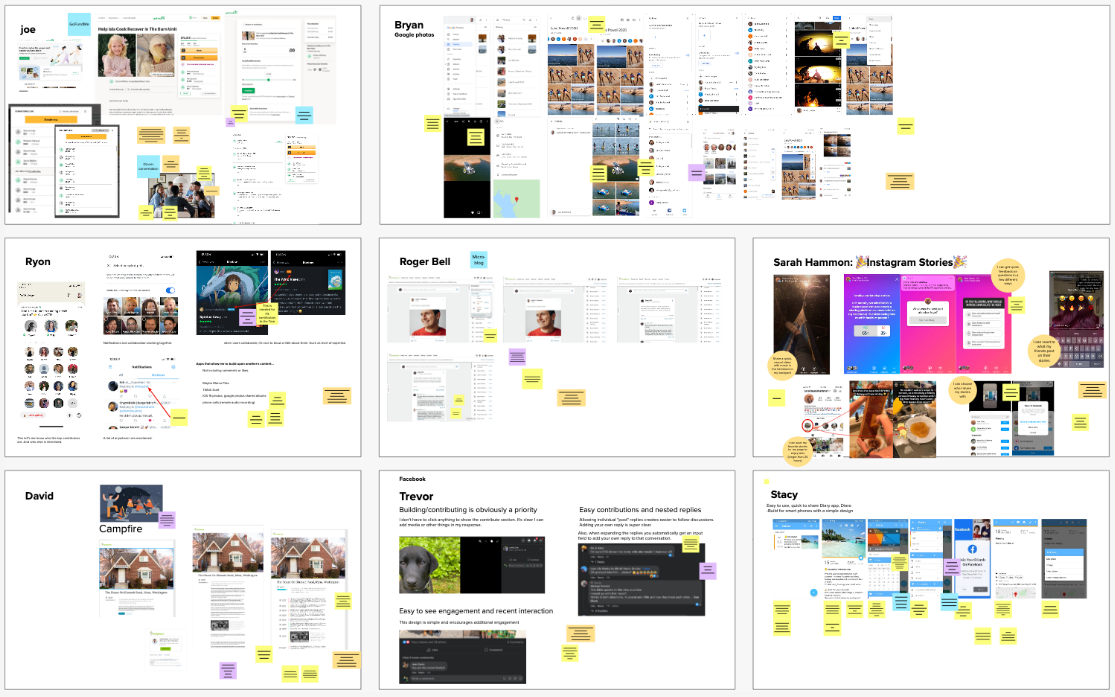
Lightning demos
We collected products and patterns from outside the organization that reflected where the sprint was heading.
Four-step sketch
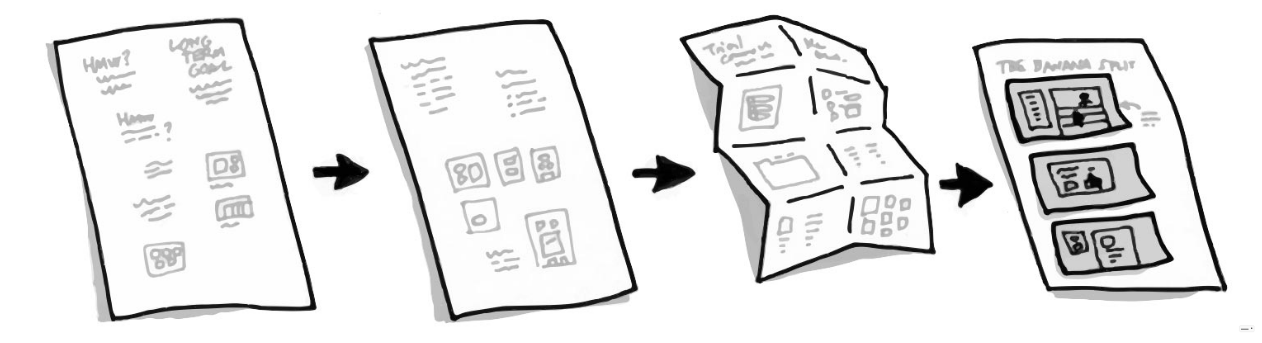
The four-step sketch distills a collection of notes into a solution sketch, quickly.
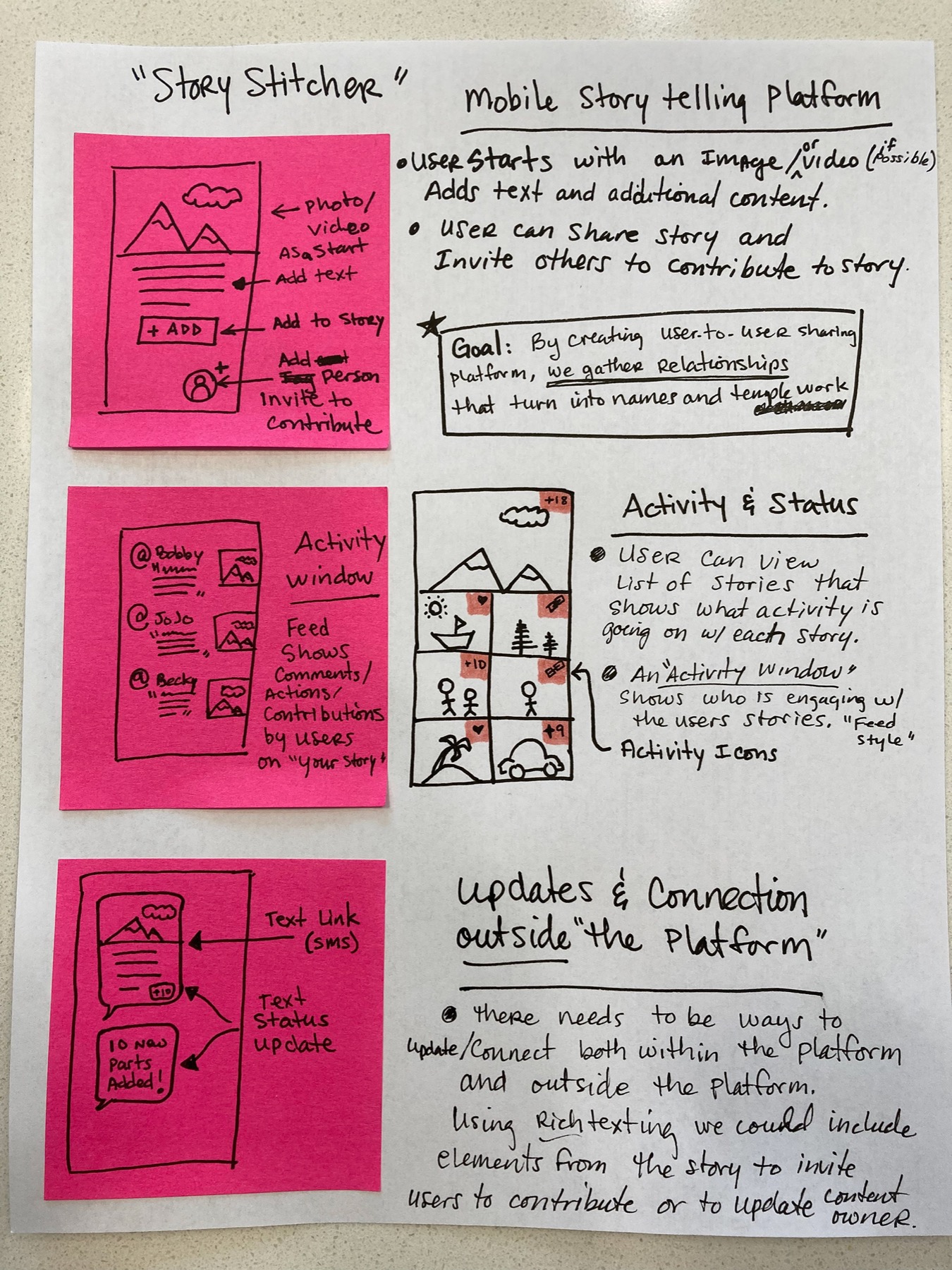
My solution sketch
My solution sketch captured three concepts: an app that lets people tell a story on a mobile device and share that experience with loved ones.
Decide and prototype
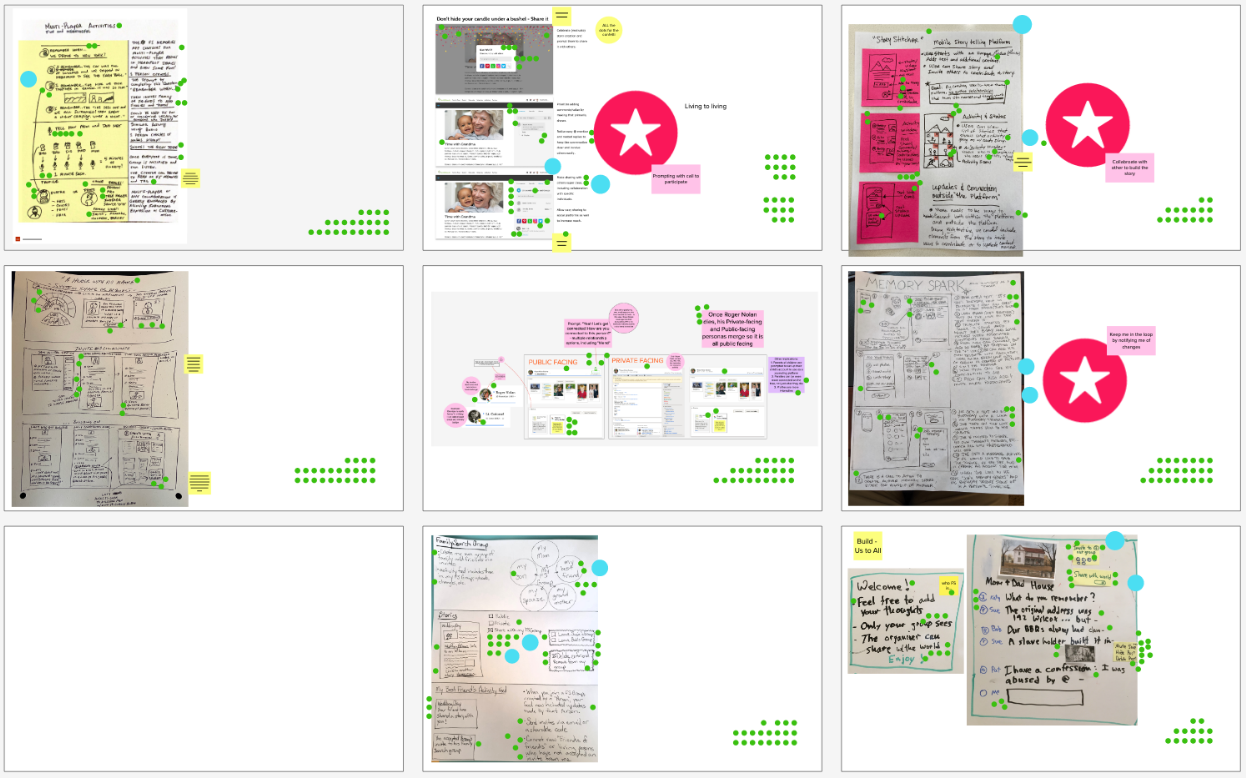
The group critiqued every sketch and voted. Mine was chosen for prototyping, and I carried it from key steps through storyboard and wireframes.
Art museum and critique
The group used different kinds of dots for feedback and voting. My solution was chosen for prototyping.
Key steps
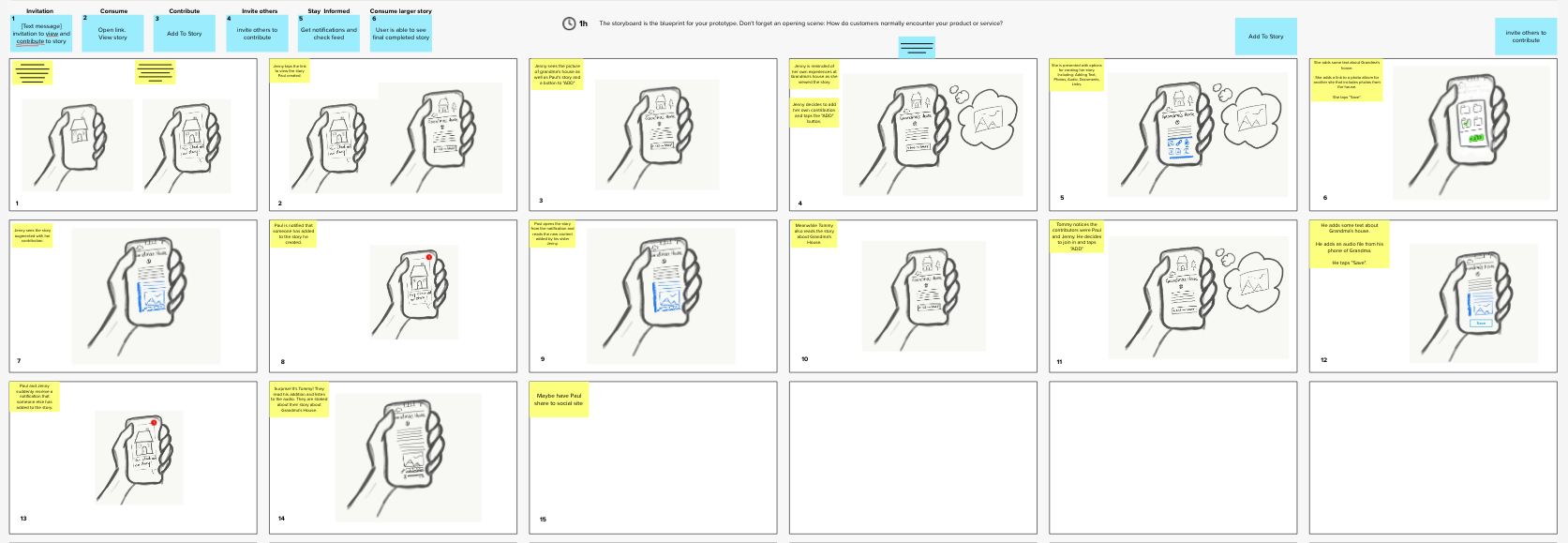
I consolidated the group’s points into the key steps the experience needed to address.

Storyboard
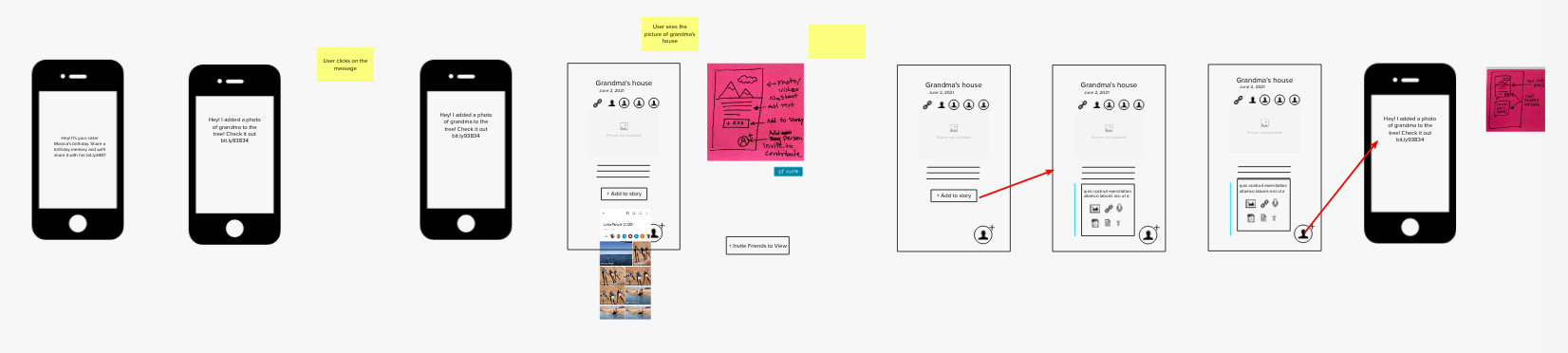
I illustrated a storyboard for each step we would need to build into the prototype.
Wireframes
I created wireframes that followed the pattern from the storyboard.
Outcome
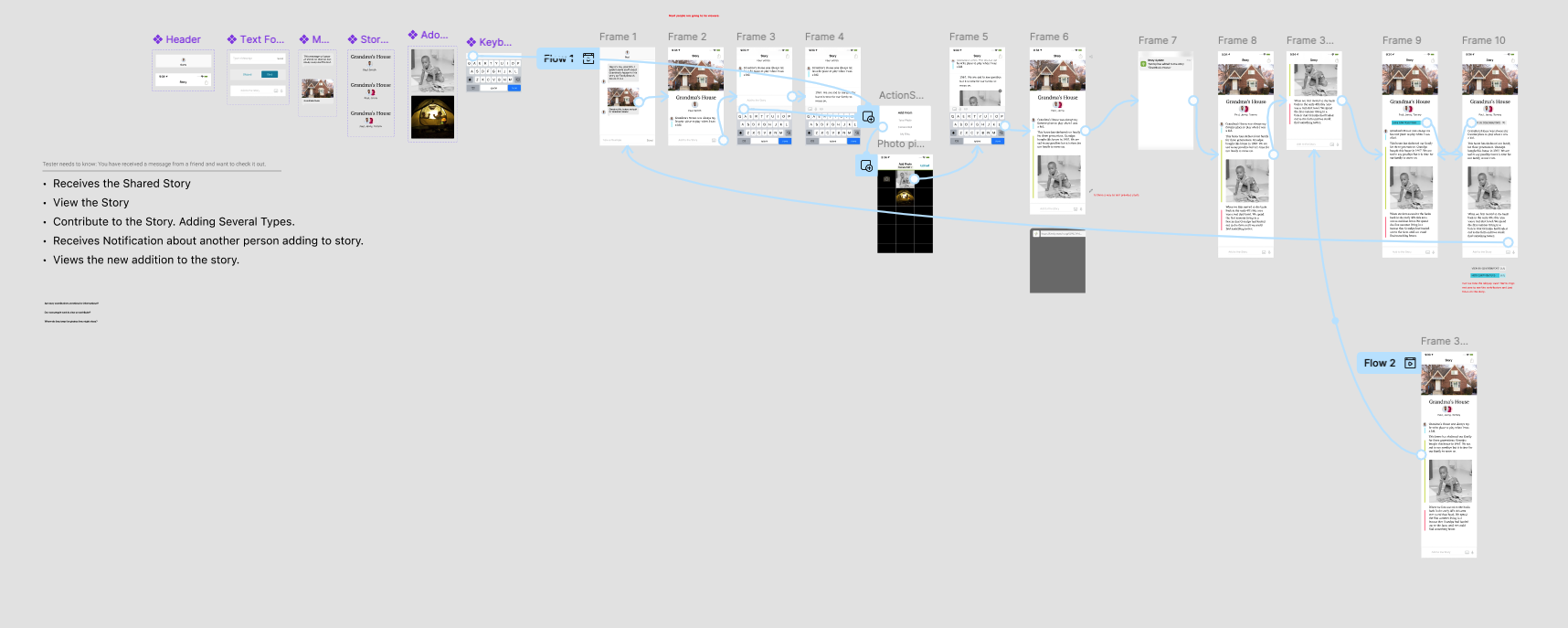
I built the final high-fidelity prototype in Figma. Story Stitcher is a mobile app where families write shared stories together—an approachable way into family history for a global audience new to genealogy.
- Ease of use
The experience followed familiar patterns.
- Approachable
It felt far less intimidating than traditional family history tools.
- Interest
Users loved the idea of shared family stories written together.